The Pretty Parasites Tarot guide
Two of Cups
Cross of Two on the Gill
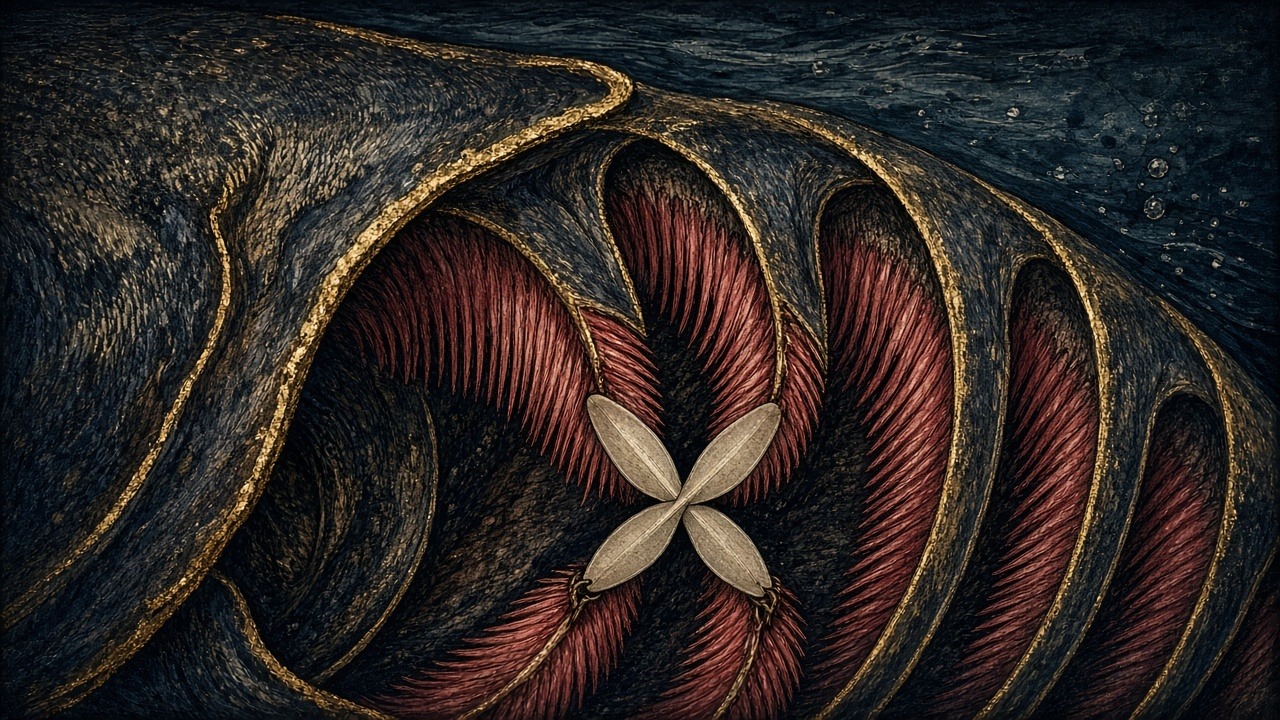
Diplozoon paradoxum, a paired gill fluke of freshwater fish
The Two of Cups is the "true love" card. A youth and a maiden pledge each other with their cups, and above them rises the caduceus of Hermes, two serpents crossed on a winged staff, with a lion's head between the wings. Franky liked that, unlike the Lovers, "these lovers are together of their own accord as opposed to the celestial puppetry of cosmic forces beyond their control." The deck's Lovers and Devil are couples too, and neither is equal. The Two gets the one marriage where nobody owns anybody.
Diplozoon paradoxum lives on the gills of bream and other carp-family fish. Its larva can survive there for months, but it can't grow up alone. Unless it meets another, it dies, usually in winter. When two meet, each clamps its sucker onto a small knob on the other's back, and they fuse completely, with no wall left between them, into one cross-shaped animal about a centimeter long. Only then do sex organs appear. Each partner is both male and female, and each one's male duct opens beside the other's female duct, so each fertilizes the other for life, which can last several years. They dine together on the fish's blood.
Look at the card again: the fish has been wearing the caduceus under its gill covers all along. Plato's Aristophanes said people were once double creatures until Zeus cut them in half, and that love is each half hunting for the other. Diplozoon runs the myth backward. It begins as a half and becomes the double by choice. "Till death do us part" stops being a promise and becomes anatomy, because there is no longer a two to divorce.
The worm makes the case that equal, faithful love is real, and that some maturity only happens with a partner. It also shows that something always pays for the wedding. Most couples dine on a third party: a family, a job, friends who keep the blood flowing. The risk of the Two is forgetting which half you were. The other is never asking who's paying.
Here's to the fish, who paid for the wedding.
Scene: the red lattice of a fish gill, lit like a cathedral window; on it, two pale worms fused into an X like a small caduceus; above them, faint in the arches of the gill, a winged lion's head; two cups touching rims.
Prompt: Draw a line down a page. On one side, write what you could never have become alone. On the other, write what you can no longer do alone. At the bottom, write who is hosting the wedding.