The Pretty Parasites Tarot guide
VII · The Chariot
Silver Rein to Water
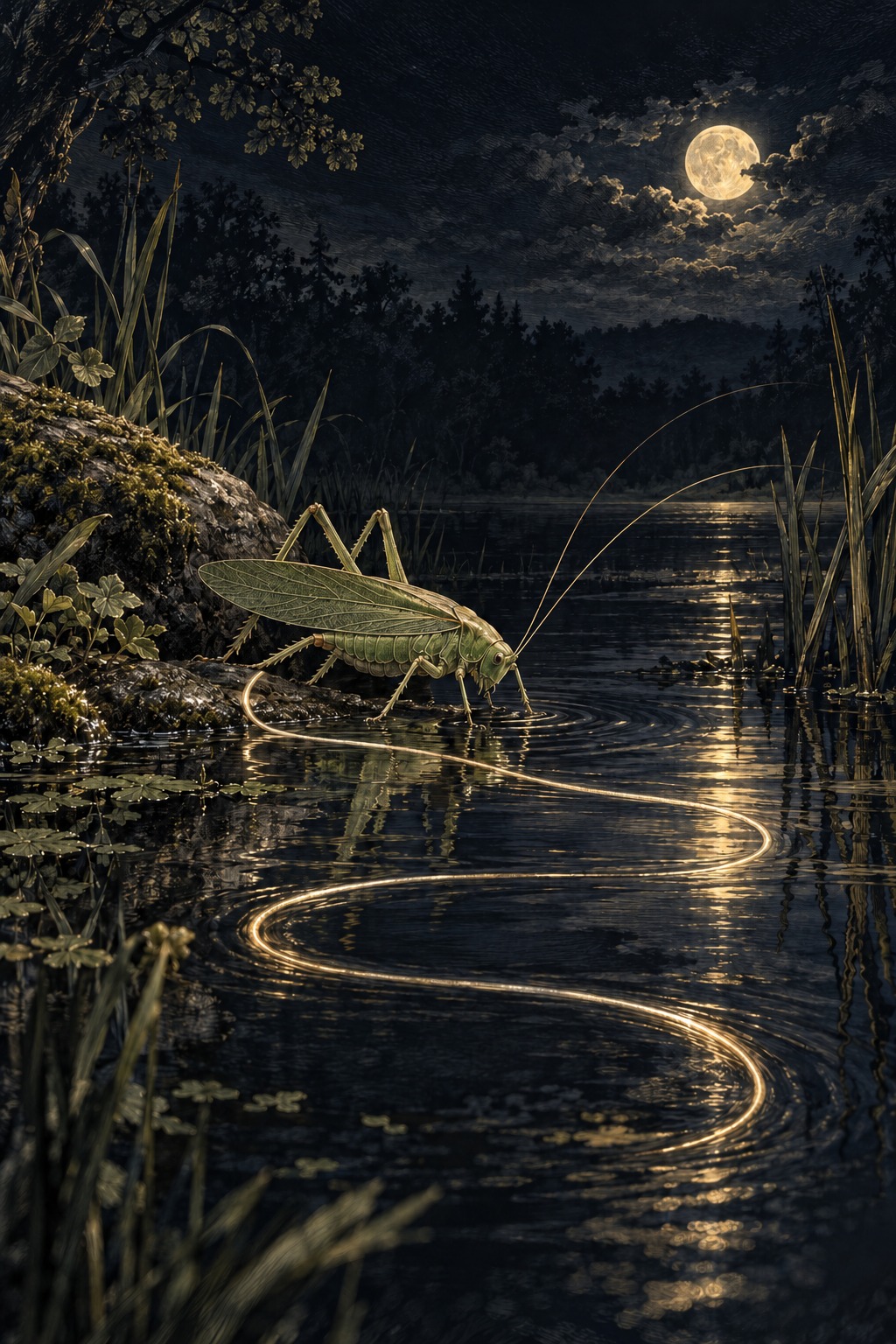
Spinochordodes tellinii, a hairworm
Strengths: ambition, success, courage, energy, discernment, decision, victory, honor, status
Risks: arrogance, obstinacy, vanity
The Chariot is prudence. There are always more than one thing driving any decision we make. It wouldn't be a decision if there weren't multiple choices. The Chariot depicts the ability to balance this choice and to navigate the multiple paths with strength and vision. Consider what the major choices are and remember that like alchemy the optimal result usually involves incorporating multiple elements of the situation. Life is not a zero-sum game—the middle path that incorporates the multiple propitious elements is better than rejecting one in favor of the other. It is harder to drive a chariot with more than one horse, but it is also the more powerful. Then again, the more horses the harder they are to control and too many horses are unruly. How many horses do you really need? Which are the best ones for this journey?
Motto: Make it so.
In Plato's version, your soul is a charioteer with two horses, one noble and one wild, and wisdom is keeping them on the road. Plato never met the hairworm. It grows inside a cricket, coiled in the body cavity until it takes up most of the room. Then, on the right night, the cricket goes looking for water and jumps in. It is the most decisive thing the cricket ever does, and none of it is the cricket's idea. The worm slides out and swims off to find a mate, and the rein goes home without the horse.
The worm has thought of everything, including the crash. If a fish or a frog swallows the cricket, a hairworm can wriggle back out alive. So when this card turns up, count your horses, and then ask which of them is driving. Ambition, love, money, the voice that says water, now: some of what pulls your chariot was never yours. Prudence isn't having no passengers. It's knowing who they are.
The old moralists called prudence auriga virtutum, the charioteer of the virtues: the one that decides when courage is bravery and when it's just noise. The word comes from providentia, seeing ahead. It's a fine idea if you're sure who is holding the reins.
This is all well and good if you're a male aristocrat developing a system of virtue ethics in ancient Athens (where among other things—the eros between a boy and his teacher is considered to be the highest form of friendship) or the Grand Inquisitor, but how are the rest of us supposed to know what exactly counts as Good and what counts as Evil?
The word "prudence" derives from the Latin prudentia, meaning "foresight and sagacity." In this case, the virtue is the ability to judge between virtuous and vicious actions, not only in a general sense, but with regard to appropriate actions at a given time and place. Distinguishing between courageous and cowardly acts is an act of prudence. Distinguishing between necessary and unnecessary risk is also an act of prudence. The right type of risk is courage, the wrong type is cowardice.
If in the Lovers card we must decide whether a relationship is worth it, the Chariot makes us think about what it will take to make it work. All relationships, sexual or otherwise, involve compromise as much as dedication. You cannot have the latter without the former, but all too often we think we can force things by the sheer force of our will. However, the experienced driver knows that she can only do so much with the horses she has to work with. Driving a Chariot isn't just about having the strongest horses, more important is ensuring that the horses can work together. No matter how intelligently or ruthlessly you wield the reins, you'll get nowhere if the horses are pulling in opposite directions. If the horses cannot work together, it is best to choose the best one. Indeed, there are many journeys where it might be best to ditch the Chariot altogether or even abandon the horse if what you have ahead of you isn't a road but a dense forest or mountain or marshy bog or a sea. If we are greedy, there will be too many horses. If we are overconfident, we may fight battles we have no business in fighting. This relates to finances, society, and all too often love.
It is up to the Chariot driver to concentrate on her objective and to choose how many horses are best for her journey. A one horse chariot is swifter than two, but if you can harness four horses and manage to control them, the chariot will be faster and more enduring.
This card is meant to make you reflect on the different forces pulling you this way and that, and sometimes the right decision is to abandon them altogether and pursue your goals alone. Abandoning the Chariot is always an option—you are not bound to it.