The Pretty Parasites Tarot guide
Three of Wands
Ivory Sisterhood
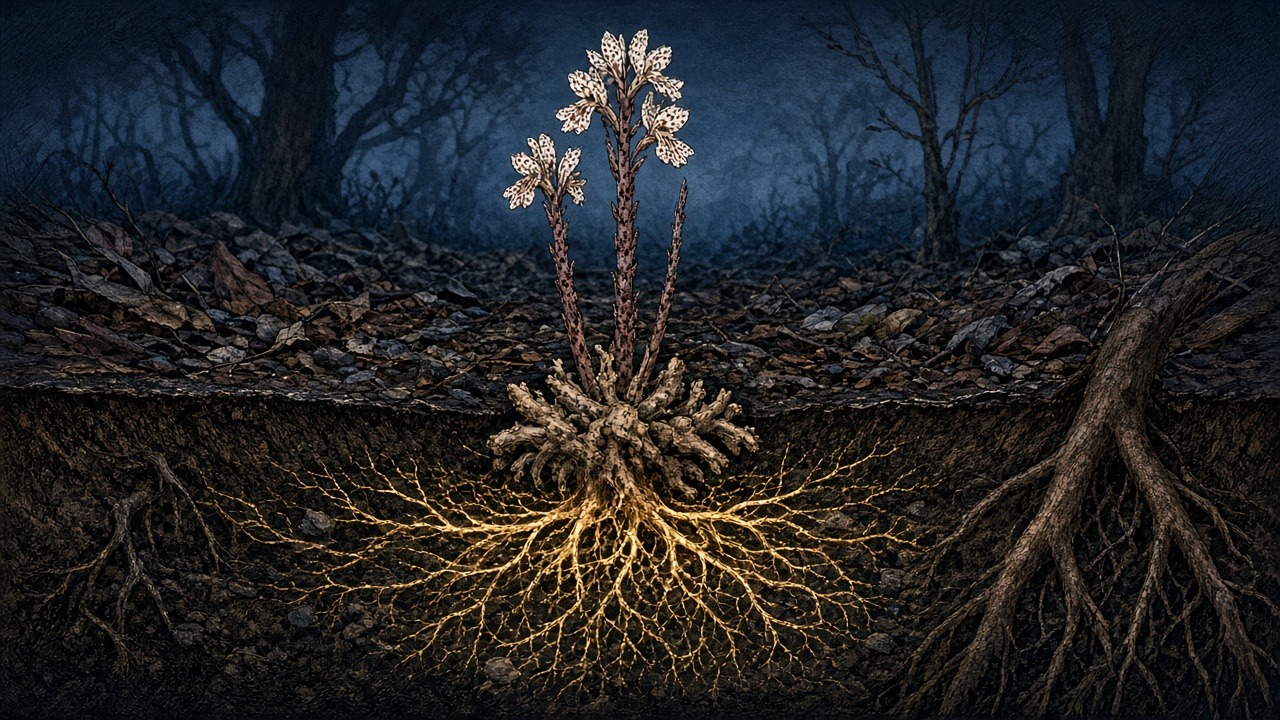
Corallorhiza maculata (spotted coralroot; Orchidaceae), a fully mycoheterotrophic orchid
Spotted coralroot has no leaves and no chlorophyll. It lives off fungi, which live off the forest's trees. It isn't one plant with one appetite, either. There are at least six genetic races, and each one feeds only on its own group of fungi.
The Three is the crowd pip, and this is the most elegant crowd in the forest: a sisterhood that meets underground and only appears in public to flower. None of them made their own carbon and none of them are sorry. Where the Ace of Wands is one seed's violent optimism, the Three is what optimism looks like once it has incorporated — a consortium, a scene, a salon that reads the same mycelial text. Look closer and the sisterhood turns out to be six sisterhoods. They wear the same ivory, and each one will eat only at its own table. Every one of them is a snob about fungi. It is the most human thing in the suit.
Held together: the opportunity is that you do not have to be self-sufficient to be magnificent; plug into the right commons and your leafless, talentless, unphotogenic self can bloom in company. The risk is that a commons is only ever one tree's generosity away from collapse, and you will be the last to know — the fungus does not send memos, and the tree does not know your name.
Scene: a dozen pale spotted wands rising from dark conifer litter like candles in a crypt, the unseen Russula web beneath rendered as faint gold script.
Prompt: Who is upstream of your comforts — who pays the fungus that pays you? Write one paragraph from the tree's point of view.